
How to Choose Abstract Art for Neutral Interiors: A Collector’s Guide
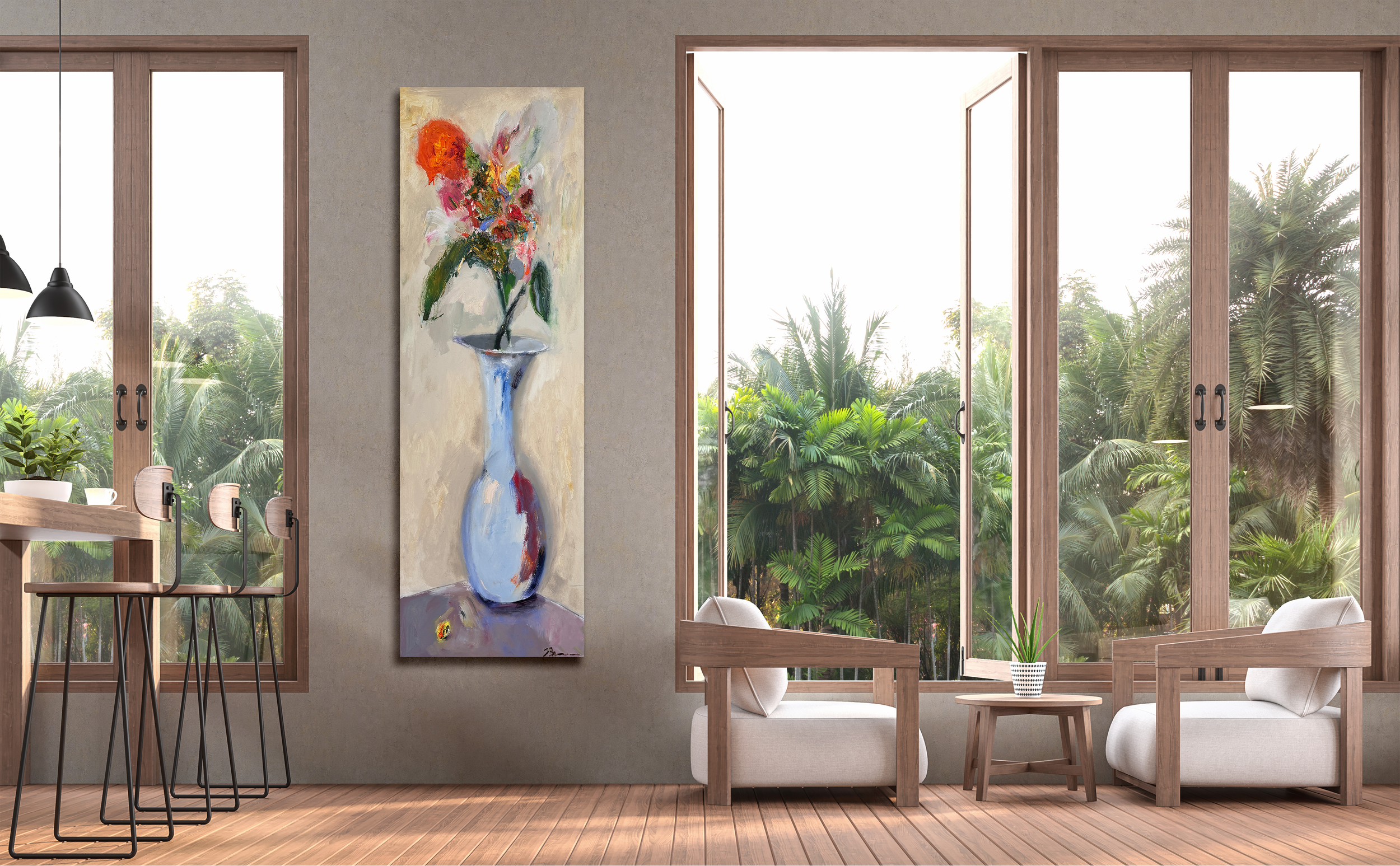
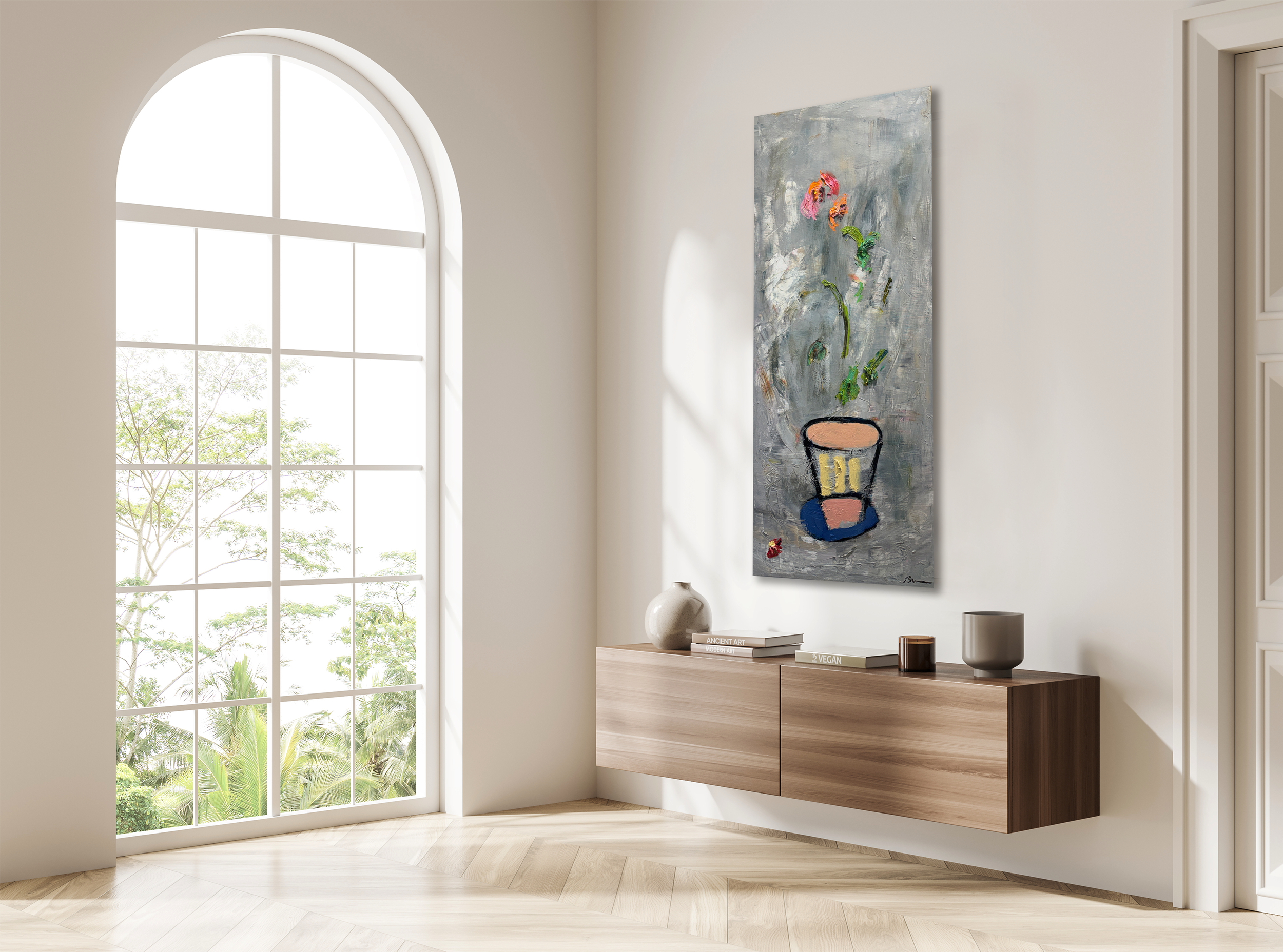
A quiet study in balance: soft neutrals, natural light, and one expressive floral gesture that brings the space to life.
How to Choose Art for a Neutral, Modern Home
Choosing artwork for a neutral interior can feel both exciting and overwhelming. Warm whites, layered beiges, natural woods, and soft textures create a beautiful foundation, but the right piece of contemporary abstract art can bring the entire room to life.
This guide walks you through how to select artwork that complements a calm, modern organic space, using Bradford Brenner’s abstract paintings as examples of how color, line, and texture can transform a room.
1.Understanding Color & Mood in Neutral Interiors
Neutral interiors rely on subtle shifts in tone rather than bold color palettes. That’s why choosing art colors becomes such an important part of the process.
Soft whites, muted grays, warm beiges, and natural wood tones create a serene backdrop. Artwork with gentle tonal fields blends seamlessly into this environment, while a single expressive gesture or accent color introduces just enough contrast to keep the room feeling intentional.
When selecting art for a neutral home, consider:
Warm vs. cool undertones in your walls and furnishings
How much contrast you want the artwork to bring
Whether you prefer calm, tonal pieces or a single bold color moment
How the artwork interacts with natural light throughout the day
Even a minimal palette can feel rich and layered when the artwork is chosen with intention.
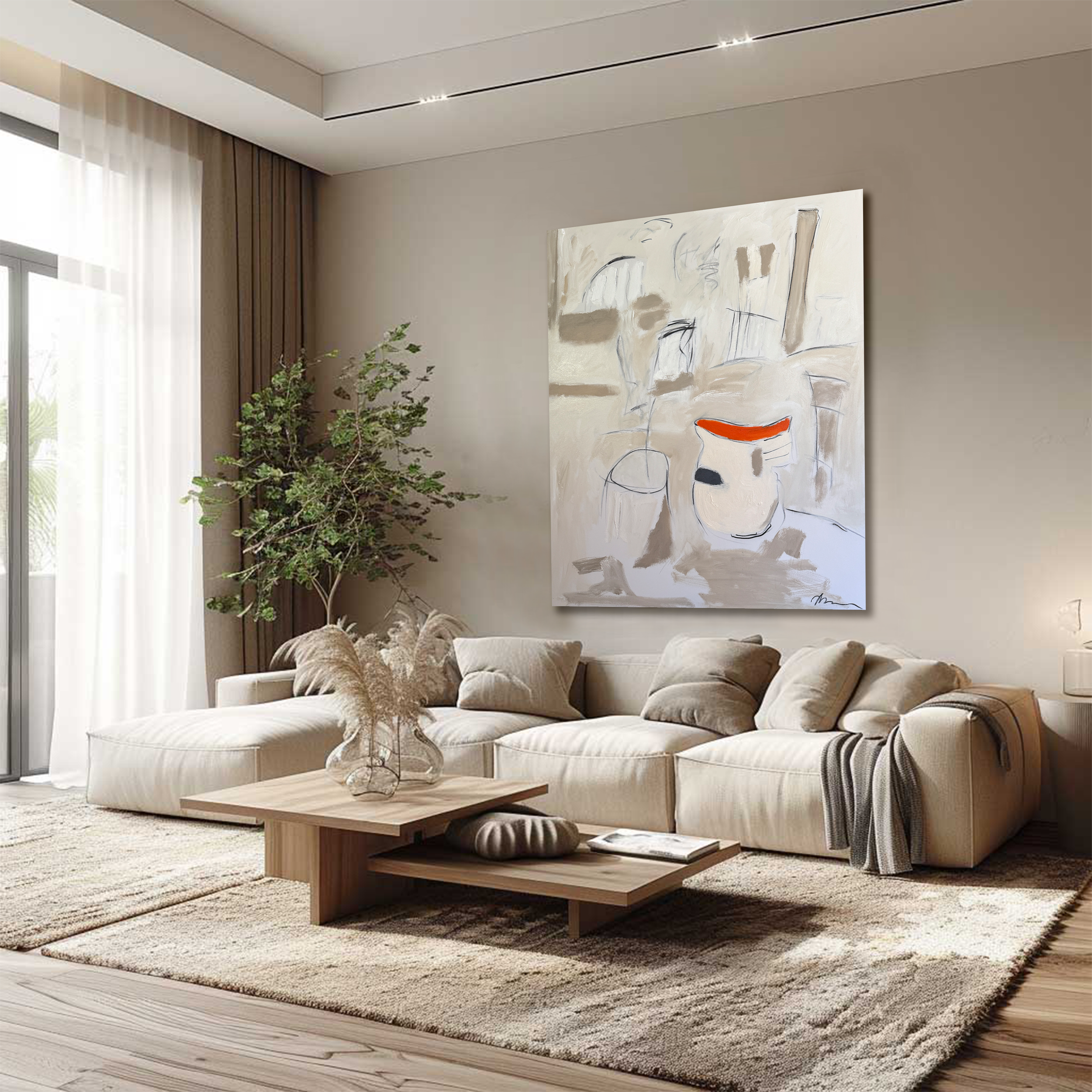
A study in restraint: layered neutrals, natural textures, and a single burnt orange accent that gives the whole space its rhythm.
2.Line Driven Abstracts & Vessel Forms
Designing with abstract art becomes much easier when you understand how line, form, and subtle color shifts influence a room. Bradford Brenner’s line driven abstracts and vessel inspired compositions are especially effective in warm neutral spaces.
In interiors built around beige, cream, natural wood, and soft texture, abstract art with gentle tonal fields creates a calm foundation. Then a single expressive gesture: a contour, a line, or a bold color moment like the orange red band in this piece, introduces structure and visual interest. It’s a simple way to bring personality into a minimalist or modern organic space.
This style of artwork is especially effective because it:
Layers seamlessly with neutral palettes
Adds contrast without heaviness
Complements modern, Scandinavian, and European inspired interiors
Works well above sofas, consoles, and large furniture pieces
Creates a focal point while keeping the room serene
For collectors building a cohesive home, pieces like In Good Form or Bradford’s vessel sketches offer clarity and balance; the kind of modern abstract wall art that feels timeless, versatile, and easy to live with.
3.Texture, Brushwork & Movement
Texture plays a major role in how artwork feels in a room. Thick, expressive brushwork especially in textured abstract art adds dimension and movement to otherwise soft, quiet interiors.
Why texture matters:
It adds visual depth without adding color
It creates shadow and light play throughout the day
It brings a handmade, organic quality to modern spaces
It pairs beautifully with natural materials like linen, wool, stone, and wood
Even in a neutral palette, textured brushwork can make a piece feel alive and emotionally resonant.
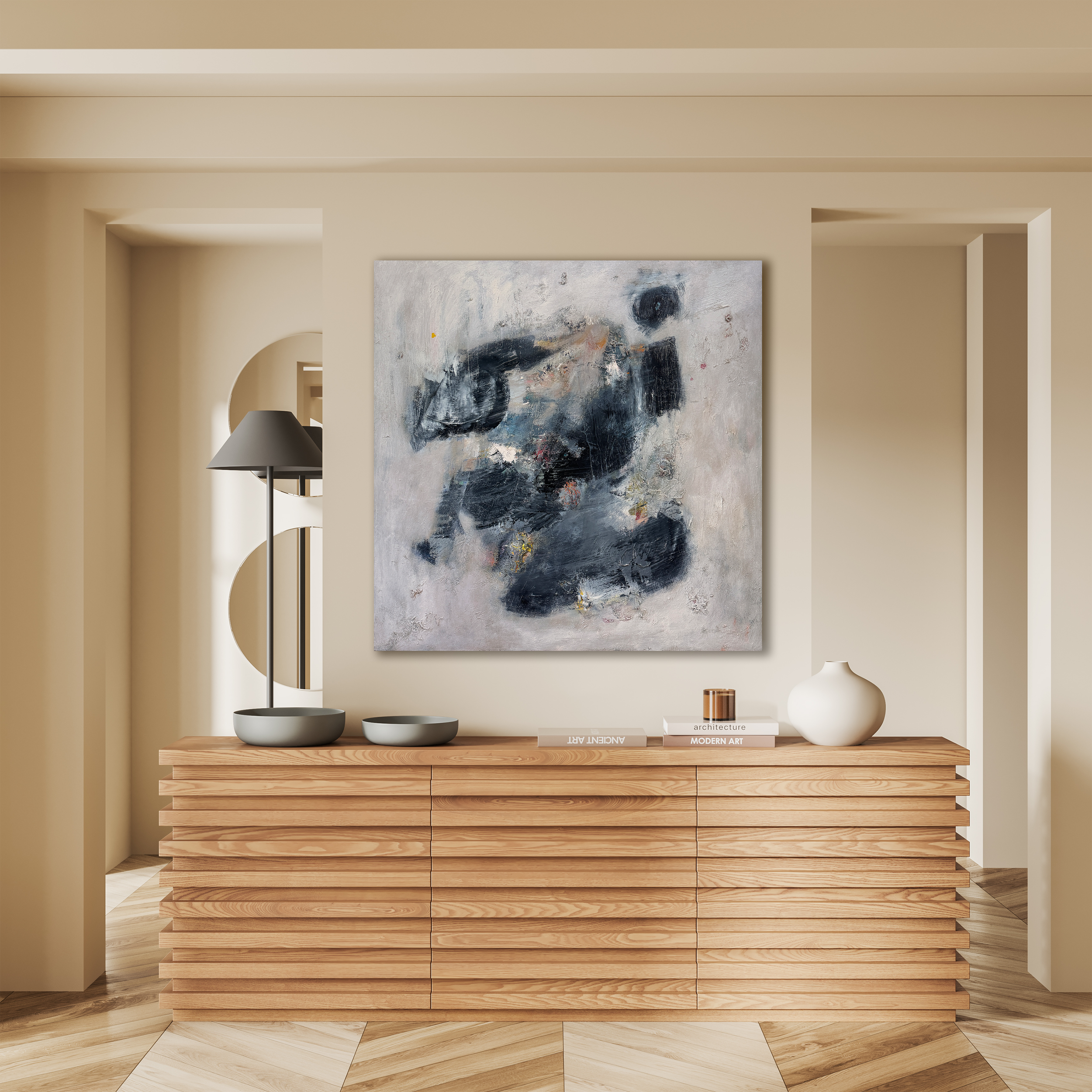
Texture brings the quiet drama, layers of paint that add depth without adding noise.
4.Scale & Placement: Getting Proportions Right
One of the most common questions collectors ask is how to choose the right size artwork for a space. Scale has a huge impact on how a room feels, and sizing artwork correctly can instantly elevate a home.
General guidelines:
Above a sofa: artwork should be two‑thirds the width of the furniture
In a dining room: choose pieces that feel anchored by the table, not floating
In hallways or narrow spaces: vertical compositions add height and elegance
For large walls: consider diptychs, triptychs, or oversized single works
Large scale abstract art is especially effective in neutral interiors because it adds presence without overwhelming the palette.
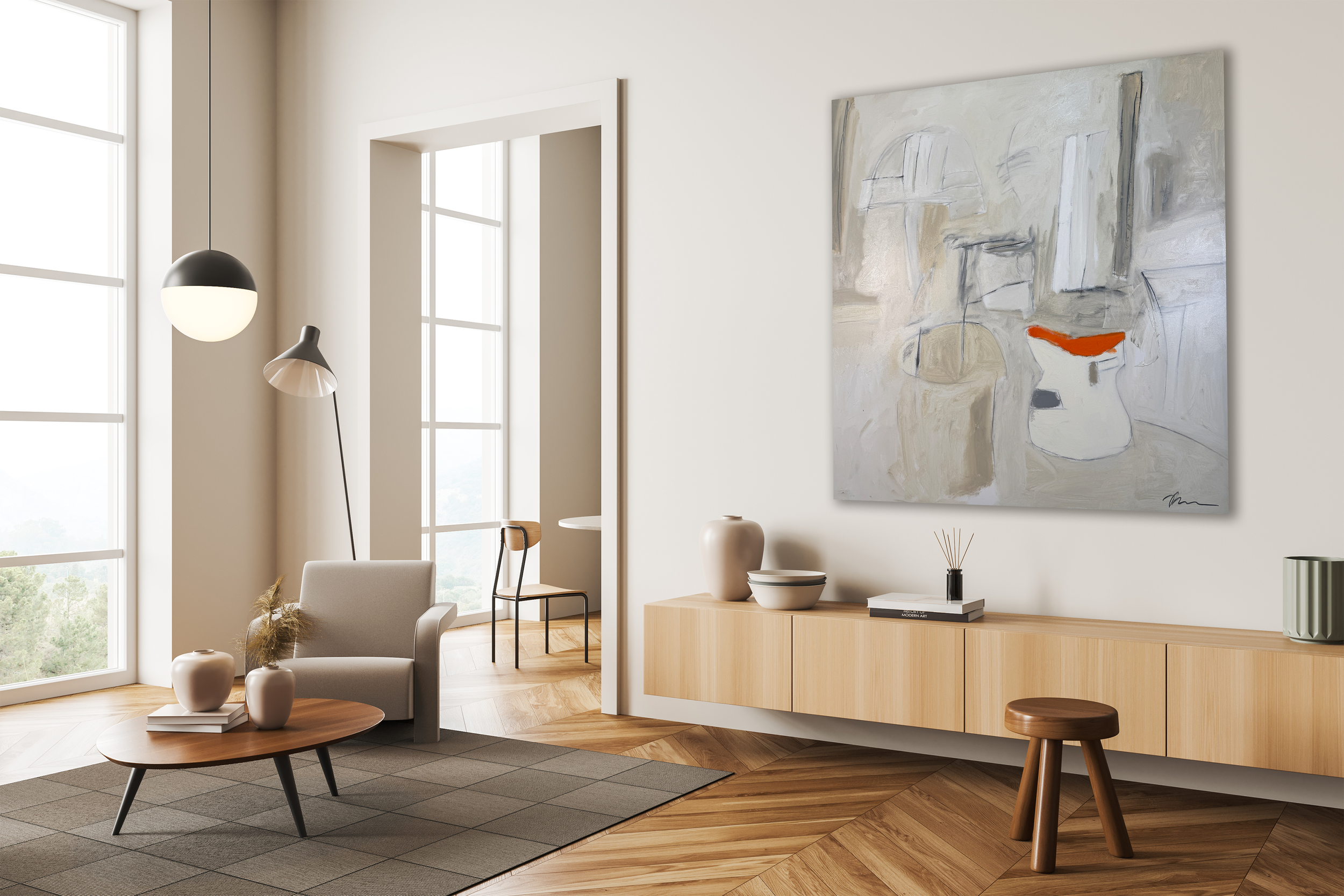
Clean lines and intentional spacing, proof that the right scale can make a room feel effortlessly composed.
5.When to Consider a Commission
If you have a specific wall, palette, or mood in mind, a custom piece may be the best option. About half of Bradford’s work is commissioned, which allows collectors to tailor:
Color palette
Scale and proportions
Mood and energy
Level of texture or movement
A commission is ideal when you want artwork that feels deeply personal and perfectly integrated into your home.
Learn more about how art commissions work.
A tailored moment of color and character, art that feels made for the room because it is.
Building a Home with Art That Feels Intentional
Neutral interiors offer a beautiful canvas for contemporary abstract art. By understanding color, texture, line, and scale, you can choose pieces that bring warmth, clarity, and personality into your home.
Whether you’re drawn to soft tonal abstracts, expressive brushwork, or bold minimal gestures, the right artwork can transform a room; not by overpowering it, but by completing it.
If you’re feeling inspired to bring a piece like this into your own home, you can explore the full collection of originals and learn more about commissioning your custom piece here.
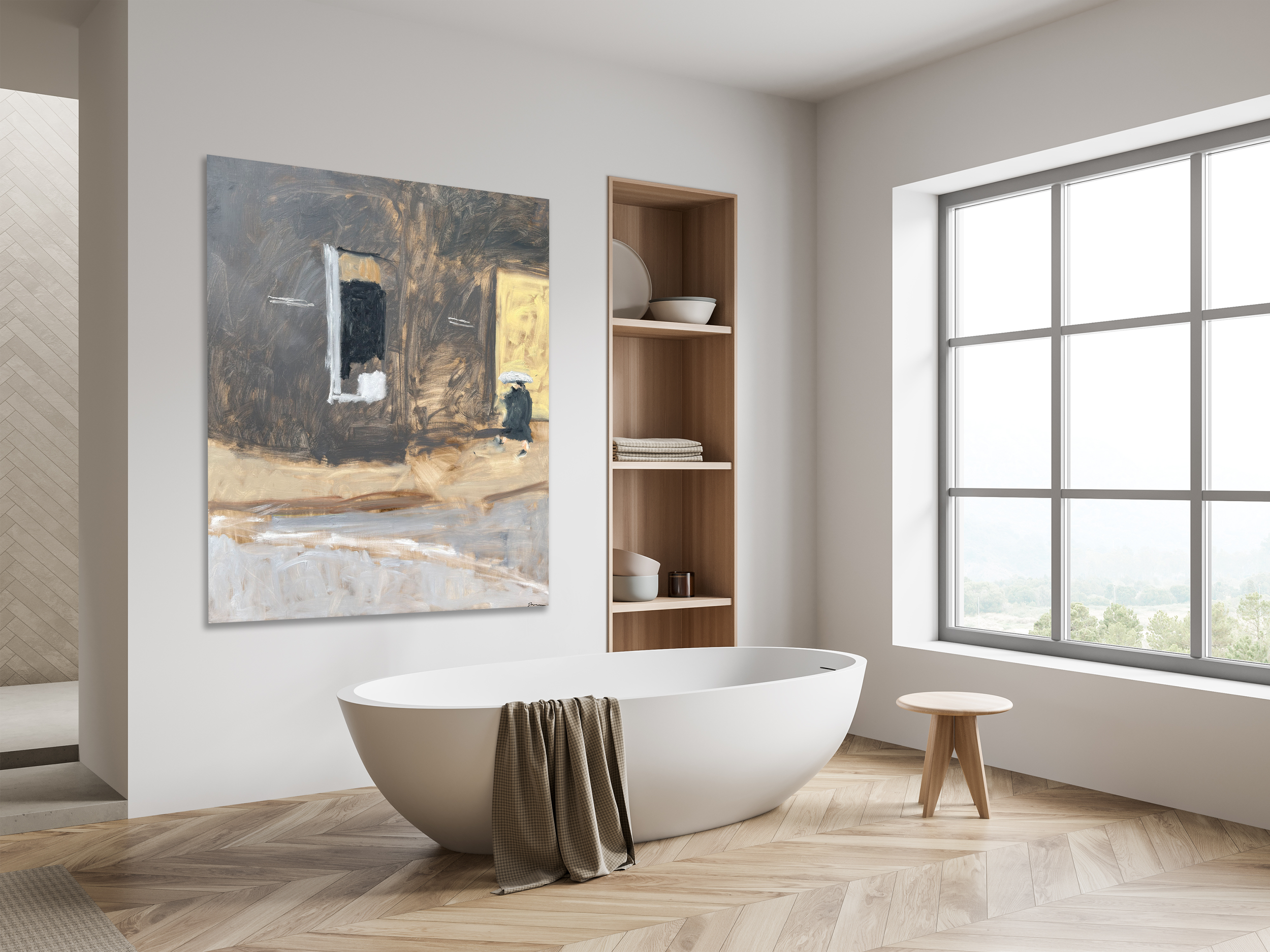
Art in unexpected places brings softness and intention into the everyday.

About the Author: Jessica Parker-Brenner
Born in San Diego and raised along the West Coast as a proud Navy kid, I’ve always been drawn to places with soul. Whether it’s the quiet charm of Medford, Oregon, the creative pulse of San Luis Obispo, or the wine rich warmth of Healdsburg, California. My journey has been anything but linear, but every chapter has shaped how I curate, connect, and create.
Before stepping into the art world, I spent nearly a decade immersed in wine culture. First in St. Paul, Minnesota, where I managed a tasting room while completing my degree, and later at Ferrari-Carano Winery in Healdsburg. There, I oversaw the tasting room and led buying for furniture and merchandise across the Plaza and the Dry Creek Villa, blending hospitality with design.
In 2016, I joined the Bradford Brenner Gallery, where I’ve spent the past nine years managing operations, exhibitions, and brand development. While I may not have a painter’s touch (Brad and I learned that the hard way…RIP to many tubes of oil paint), I found my creative stride in digital design, SEO strategy, and social media branding.
My background in consumer and business lending (JP Morgan Chase), paired with my early banking internship at Washington Mutual, gave me a strong foundation in client relations and strategic planning. Today, I bring that same precision and empathy to the gallery. Whether I’m curating installations, designing promotional materials, or guiding collectors through Bradford’s work.
At heart, I’m a connector. I love helping people find beauty, meaning, and resonance. Whether through a painting, a story, or a shared glass of wine.